requestId:684c3e3683a916.40805867.
Respecting the king or respecting the heaven: Reconstruction of the Late Ming Dynasty based on human ethics and life
Author: Cai Jie (Doctoral Graduate Student of the Department of Philosophy in Qinghua)
Source: “Original Dao” No. 38, edited by Chen Ming and Zhu Han, Hunan Major Bookstore published in September 2020
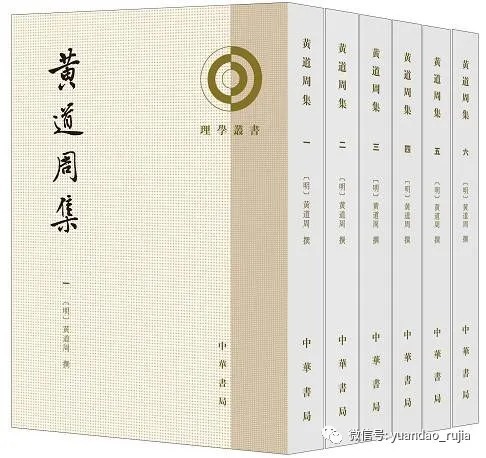
(“Huangdao Zhou Collection”, 2017 Edition of the China Book Bureau)
Content summary:The great scholar Huangdao Zhou proposed a series of problems in the late Ming Dynasty politics and society. If you understand its treatment plan, you can start from the perspective of “Age”. The important thing is to set the goal of “respecting heaven” and advocate the initiative of “governing heaven”. Specifically, it can be developed from three aspects: political, moral and sexual and rational aspects.
In the political level, he took the principle of “the one who is familiar with the Confucianism” and proposed the “one who is a common person”. This treatment plan is inherited and developed in a single aspect by the early Qing Dynasty. What is the promising future for extreme transformation? Didn’t he be cut the same way. For criticism of the monarchy. In the context of the management of the monarch and consolidation, father and son are regarded as heaven, that is, the “faith” of father and son is used to save the “respect” of the monarch and minister, and regard “respect” as the standard and standard of “respect”, so that the monarch and minister can take father and son and minister as the same.
In the aspect of nature and reason, we will be in the yard of destiny, prevent and control the increasingly volatile desires of the people, and thus serve as the foundation of the bride and the bride. The three bodies of the bride, the bride and the bride are used by each other to complete the protection of civilization and education. Huang Daozhou’s three plans for the Late Meiji Road were to be at work at this time of modern times, rather than dragging her suitcase. The rejuvenation of Confucianism has a certain meaning of borrowing.
Keywords: Respecting heaven; respecting king; ethics; reason; age learning
The late Ming Dynasty was the era of “the great destruction of thinking”. Faced with a series of problems such as the rigid political system in the late Ming Dynasty and the absolute failure of the monarch and ministers, the social rituals and the ill-gods of learning after the Ming Dynasty, Minsheng’s thinking scholars reflected on the perspective of differences and put forward their respective countermeasures.
As a three-dimensional, multi-level theoretical system, traditional Confucianism is a focus concept in China’s traditional political arena and moral level. The reflection and reconstruction of ethics and nature are often useful ways for modern Confucians to explore and master the national governance.
The great scholar Huang Daozhou of a generation was precisely the transcendent heaven that settled in the roots, and stood the purpose of “respecting heaven”. They took the common people as the sky on the political level, the father and son as the sky on the moral level, and the life as the sky on the moral level. They explored and advocated the “governance of heaven” of the great source, and tried to reconstruct the political form of the late Ming Dynasty, the order of human nature and the way of life, thereby developing the management of the country.
It can be seen that for the old political system, Huang Daozhou pointed out that it is actually a rooted and sourced treatment path, rather than a fierce criticism of overturning or reforming and making other changes. Its treatment plan has a certain meaning of borrowing the rejuvenation of contemporary Confucianism. Next, this article focuses on the content labels of Huang Dao Zhou: Heavenly Comprehensive, Industry Elite, Sweet Writing, “Fangqie Collection” and “Commentary Collection” as the middle, and specifically discusses the topic of deepening.
1. The choice of respecting heaven and the establishment of the rule of heaven
From the perspective of history, after entering the Song Dynasty, there was a clear direction in the “Age” study, that is, to vigorously explore and advocate the purpose of “respecting the king”. It should be said that this has its own landscape. In the face of the situation of the vassals of the Tang Dynasty and the chaotic conflicts of the Five Dynasties, Confucian scholars checked and proposed the initiative of “respecting the king”, until Sun re-edited “Respecting the King” and completed the serious redirection of “Respecting the King” [2].
-70.jpg!article_800_auto)
(六同)
Even the “Age” of Juanguo, which was popular in the Song and Ming dynasties, strongly advocated the guidance of “respecting the royal family and suppressing the marquis” [3]. Therefore, “respecting the king” is the tenet of learning “Age” since the Song and Ming dynasties.
Huang Daozhou did not object to the principle of “respecting the king” in “Year”. He also clearly stated that “Year” is not as good as the king? Why does the king have?” “Year” has no responsibility for the king.” [4] But he did not develop the “respecting the king” thinking like the Song Confucians, or perhaps he said that his purpose of “respecting the king” in “Year” was only to stay under the thoughts of the ancestors. We should see that what Huang Daozhou really wants to discover and establish is actually the “respecting heaven” thinking of “Year”.
IfIf it is just a political “respecting the king”, it is not difficult to lack an ultimate root. As a king, the basis of law and regulations is a traditional Confucian proof logic, so “respecting heaven” is just a more fundamental layer of thinking of “respecting king”.
“Respecting the king and expelling the barbarians” is the main meaning of “Year”, but its origin should be traced back to the level of heaven. Therefore, it is said that “The king, the king, the middle Xia, and the same surname in “Year” are the fate of “Year”” [5], “The Baoying meaningYear” is the one who is originally from heaven and destiny” [6].
Then, the king’s determination does not come from man, but from heaven. Huang Daozhou retorted the influence of the first decision of the sky, such as “The Age does not establish a king with his ministers, but establishes a king with the sky大大大大大大大大大大大大大大大大大大大大大大大大大大大大大大大大大大大大大大大大大大大大大大大大大大大大大大大大大大大大大大大大大大大大大大大大大大大大大大大大大大大大大大大大大大大大大大大大大大大大大大大大大大大大大大大大大大大大大大大大大大大大大大大大大大大大大大大大大大大大大大大大大大大大大The determination of the king is determined and sexually influenced by the fact that the king is not inherent and not eternal.
Heaven can establish a king accurately and eliminate the king. Everyone in the whole country is a minister of heaven. The power to kill the masters, the marquis and even the king lies in heaven, not the will of the power among those who take power. Therefore, heaven is the owner and master of the highest power. If the king does not win the people, he will become a “single man” who is deposed.
Generally speaking, the purpose of “respecting the king” in “Age” was weakened, and at the same time, the “respecting the heaven” was clearly established. From the perspective of the length of time and long periods, “respecting heaven” has an eternal and essential meaning. [9]
Then, after the “respecting heaven” thinking was established, it is very difficult to distinguish whether “heaven rule” or “king rule” in politics. Compared with “king rule”, “heaven rule” can better understand the root meaning in governance, and is more determined and authoritative in the political field. Based on this understanding of “respecting heaven” and “respecting king”, the form of governance established by Huang Daozhou can be simply expressed as the third-level structure of “heaven-king-national”.
First, Huang Daozhou actually did not become “rule by man”, so it is said that “the sages do not govern people by man, but by heaven”; [10] This means that the right to govern people should be governed by heaven, that is, the right to govern the whole country is not in the hands of the king, nor in the hands of any person.
As mentioned above, the emperor did not kill the marquis at will, nor did he kill the marquis at will. Because if the rule falls into the hands of man (including the king), it will not be difficult to take advantage of the power,This forced everyone to join forces to fight for the sake of protecting their wealth and life, which eventually led to a disarray in the whole country.
Elderly, his lynching is not a
